


Bridging Markets: Decoding the India-EU Free Trade Agreement.
On January 27, 2026, India and the European Union concluded a comprehensive Free Trade Agreement (FTA), after nearly two decades of negotiations, aimed at deepening economic ties between the world's second and fourth-largest economies.
Here is why the India-EU Trade pact is the mother of all deals:
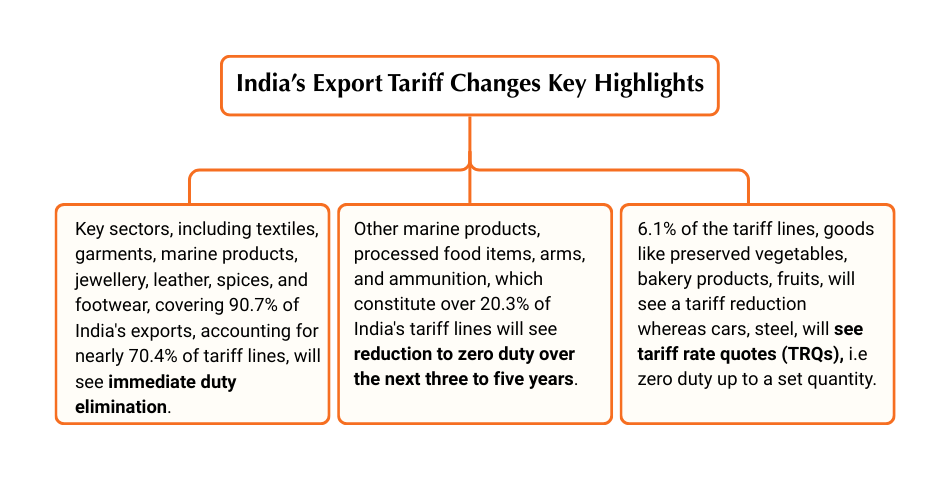
What makes the India-EU FTA beneficial for us?
Market Access for Indian Exports
A major achievement of the India-EU FTA is the enhanced market access it provides to Indian exporters. More than 99% of Indian exports by trade value will now receive preferential access to the EU market.
Boost to Labour Intensive Sector
The FTA delivers major gains to labour-intensive industries, where EU tariffs previously ranged from 4% to 26%. Nearly USD 33 billion worth of exports will benefit from zero-duty access. This sector is critical for employment generation, particularly for women, artisans and the youth.
Agricultural and Processed Food Exports
Indian farmers and agro-processors are set to benefit from preferential access for products such as tea, coffee, spices, table grapes, dried onion, processed foods, etc. This improved access is expected to enhance rural incomes and strengthen India's presence in European agri-food value chains.
Education Sector
The deal includes a framework for student mobility and post-study work. Talented Indian graduates may find it easier to study in Europe and stay on to work. This "brain circulation" can build global skills and networks.
Services Sector
The agreement allows Intra-Corporate Transferees (ICTs) and Contractual Service Suppliers (CSS) to move between India and EU member countries in dozens of sectors — from software to R&D to education. Indian IT consultants and engineers will face fewer visa hurdles.
MSMEs, Jobs, and 'Make in India' Growth
Access to European markets will help micro, small, and medium enterprises (MSMEs) scale exports and integrate into global value chains. The FTA is expected to create employment for millions, especially in textiles, leather, and emerging sectors.
Pharmaceuticals and Medical Devices
The India-EU FTA unlocks access to the USD 572.3 billion EU pharmaceuticals and medical devices market. Liberalisation of tariffs on medical instruments, lenses, spectacles, and measuring devices will enhance India's competitiveness as the "pharmacy of the world."
Attracting European Investment
A predictable and strong legal framework encourages European investors to expand manufacturing and services operations in India.
Support for Strategic Cooperation
The agreement fosters deeper cooperation on innovation, clean technologies, telecom, semiconductor value chains, and sustainability, aligning with India's future growth sectors.
Additional Benefits for India
- European companies will open subsidiaries or branch offices in India, gaining access to South East Asian regions.
- Inflow of foreign currency resulting in positive RBI reserves.
- Partnership with the EU can help India optimize manufacturing capabilities and compete with hubs like China, Vietnam, and Bangladesh.
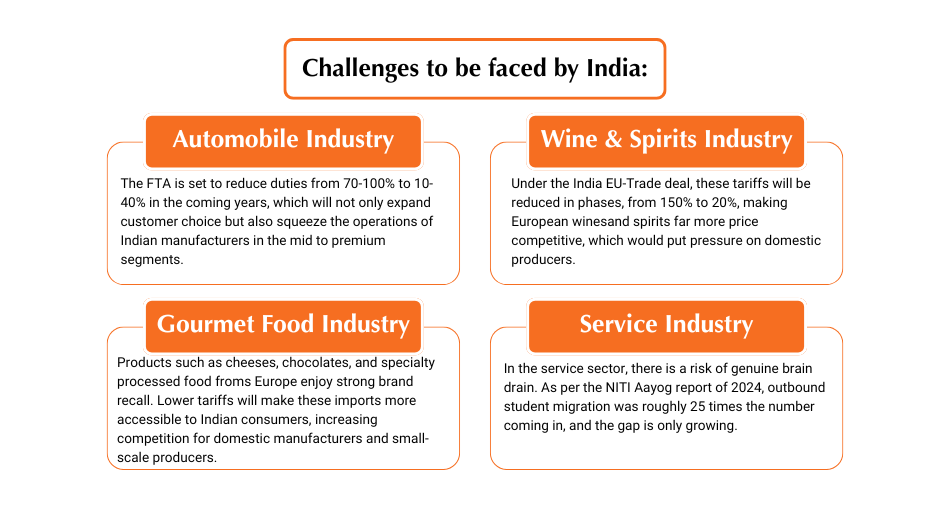
Challenges to be faced by India
Trade agreements rarely create only winners. While several Indian sectors stand to gain, there are other sectors which may find the deal challenging.
Conclusion
The India-EU FTA goes beyond a conventional commercial agreement and represents a geostrategic partnership that positions India as a credible and trusted global economic player. Aligned with India's vision of "Viksit Bharat 2047," the FTA sets the foundation for resilient and future-ready growth for both regions.
Businesses looking to explore opportunities arising from the India-EU FTA, including market entry, company setup, and FEMA compliance, reach out at enquire@kdpaccountants.com.